For far too long, Ed-tech content has been too static, too dependent on online tutorials and too scattered with no way to deep index or categorize content.
Back in the day, when you needed an explainer on a topic if it was not on a popular media library, it would mean hours of futile search and even if you did find the relevant content, scroll in the video to find the part you're looking for, or just waste a bunch of time watching content which is irrelevant to the topic you're looking for, or often just plain wrong.
Chatbots made it easier, you could now ask the AI model of your choice and get answers which you could be reasonably sure is accurate. Latest AI models give accurate answers with Chain of Thought reasoning over complex problems and further enhancements to fact-check and validate the responses before sending them to the user. These inference models tend to contain information derived from the aggregate of all human knowledge.
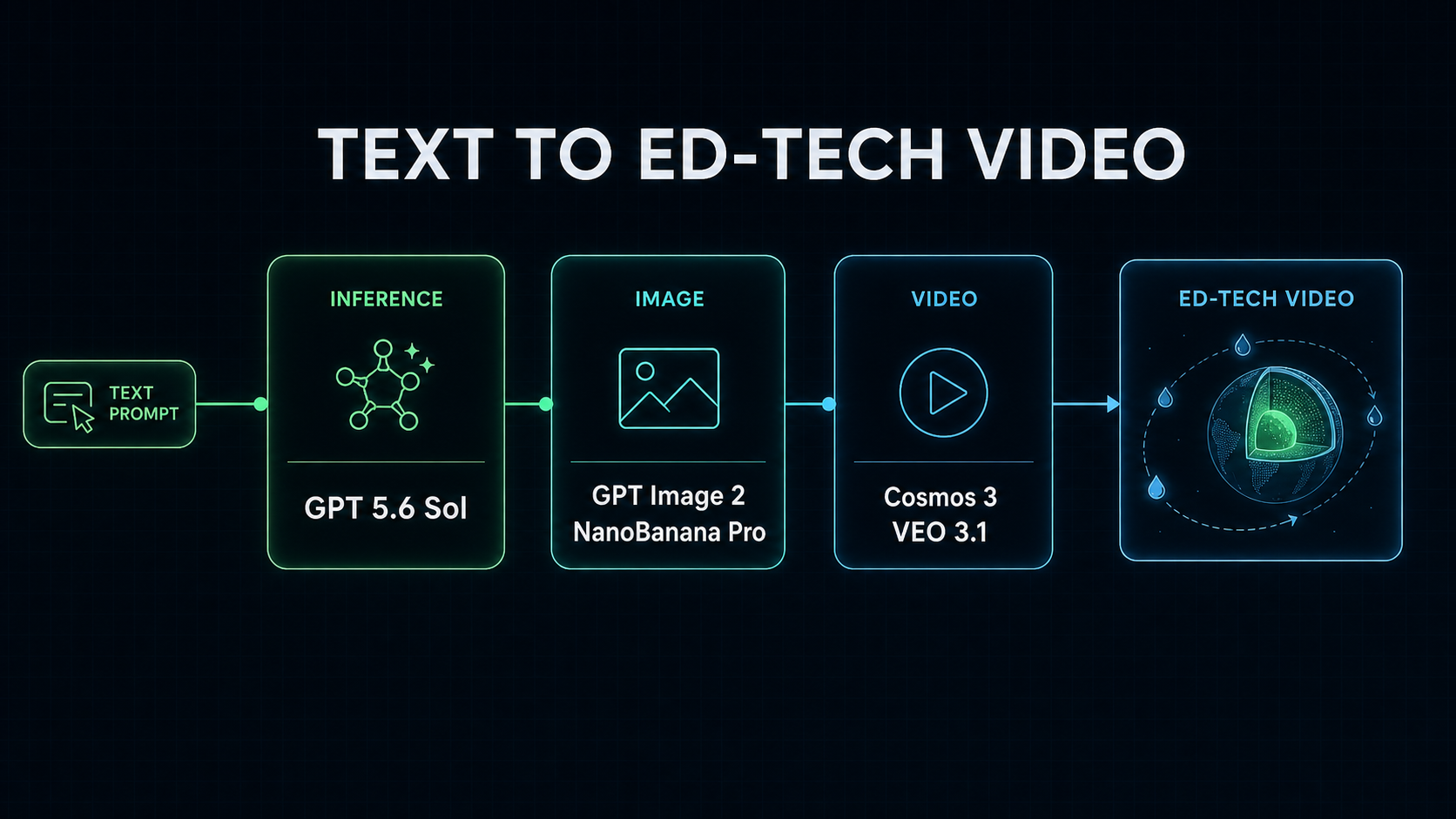
Samsar takes the evolution a step further, now instead of asking the text box about your technical query, ask it create an accurate visualization to watch, learn and share. The latest inference models no longer hallucinate or provide wrong information. In-fact the information quality is comparable to the best educators in the field. The only bottlenecks to accurate high resolution content on any topic of choice was image fidelity on texts and scientific diagrams and video physics for the animation. Now, at-least GPT 5.6 Inference gives accurate information narrative completely in the context of the information desired by the user. Image models like GPT Image 2 and NanoBanana Pro have much better text fidelity and visual recognition over charts, diagrams and texts. Also video models Cosmos 3 Pro and VEO 3.1 create highly accurate physics and motions when supplied with the correct inference prompt and starting frame description.
If publishing, use the generate metadata endpoints to create accurate topics and tags for your video from within the app itself, which you can then add to any library you're publishing for easier search and indexing. (Or build your own search and categorization tooling with the search and recommendations tooling API)
When creating ed-tech or learning content it is recommended to use GPT 5.6 Sol as the inference model for crisp accurate content and visualization. For cinematic stuff, all inference models in our repository work great.
All renders are 1-shot Prompt to Video and use GPT 5.6 Sol for inference.
For the first demonstration, We follow the a journey of a water droplet as it goes through spring, summer, winter and spring again. Each time taking on a new from as part of the Earth's water cycle.
We now showcase how earth's crust generates its magnetic field. The video demonstrates a cut-away model of the earth starting at the crust, then passing through the mantle and finally at the Earth's outer surface explaining how the earth's core is not solid but actually liquid metal which generates the core magnetic field of Earth.
For the third demonstration, we will be traveling back in time as we go through the transformation of a medieval town as printing-press arrives and watch how the arrival of the printing press transforms the town and the way of life of its people.
For the final ed-tech video demonstration of today, we will be using GPT Image 2 + Cosmos 3 to visualize millions of years of Earth's crust's movements in a single time-lapse video.
All topics including Math, Physics, Biology and more at any educational level can be rendered in 1-shot for infotainment or light viewing.. For professional distribution, educators with domain knowledge can post-process any scene in a single click or use the studio for more advanced editing before final publish. For these demonstrations we used Cosmos 3 Super as the video model, You can also use VEO 3.1 for more fast paced motion while maintaining physics and coherence. Cosmos 3 is a more economical option which still has excellent physics and context awareness when used within Samsar, the Text to Video framework.
Hope you enjoyed these demonstrations for prompt to ed-tech-video with Samsar, the Text to video agent.
To create your own simply go to the link below, the only product of its kind there will ever be or ever was. (Its open-source under MIT license)
Register for a new account, purchase enough credits for your render (90 second video incurs 1800 credits (USD 18) for a single render) All renditions are extremely high-quality and ready to publish, post-process for that extra perfection.

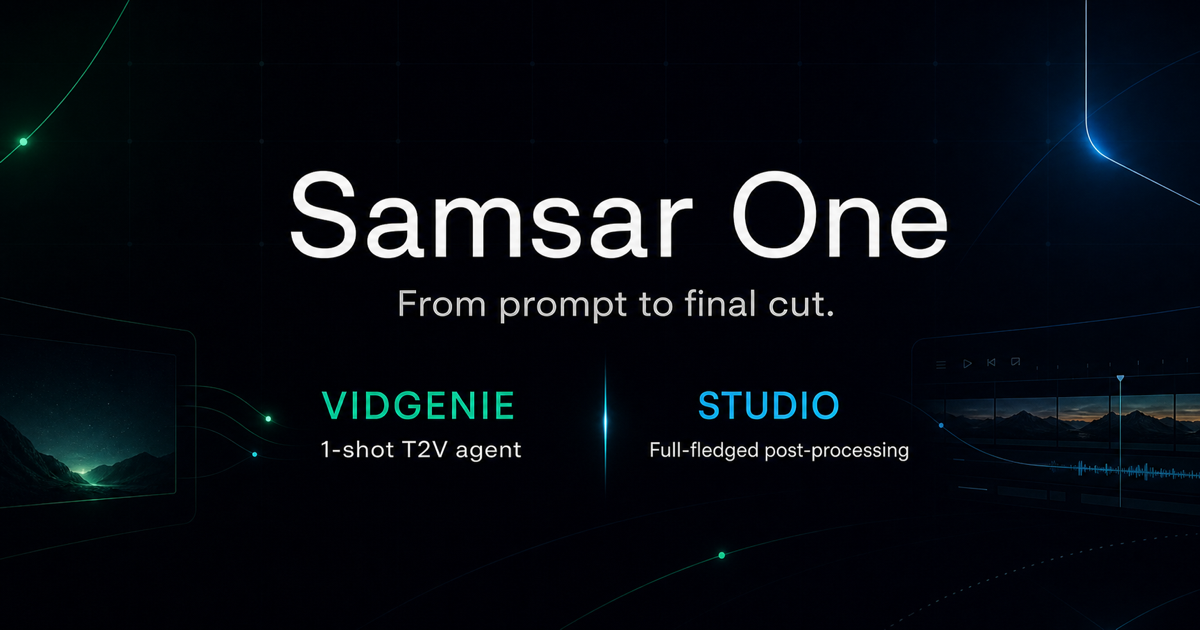
Did you know that Samsar, the agent can create text to interactive ed-tech content as well? This is the next frontier of ed-tech content. The next evolution is already deployed and open-sourced as well.